 Naasongs.fun
Custom rubber molding is becoming more demanding as manufacturers handle parts with different sizes, materials, cure behaviors, and production targets. Injection volume and injection pressure are two core machine factors because they affect cavity filling, material consistency, and process repeatability. For buyers, these parameters should be evaluated together rather than treated as separate specifications.
The future of custom rubber injection molding will depend on how well equipment can match changing product requirements without adding unnecessary complexity. For projects involving several part types, custom injection molding machine selection should focus on usable injection capacity, pressure control, temperature stability, and adjustment range under different production conditions.
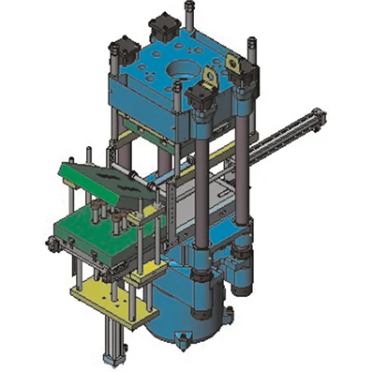
Why Injection Volume Matters
Injection volume determines how much rubber compound can be delivered during one molding cycle. The required volume depends on part weight, cavity count, runner design, material density, and process margin. If available capacity is too limited, the machine may not support the intended mold layout or production rate.
Oversizing also creates practical issues. Large injection units can increase equipment cost and may not suit smaller parts that need controlled material dosing. For this reason, custom injection molding companies often compare part families before defining machine capacity. They need to know whether future products will remain within the same injection range.
Machine configuration also affects flexibility. Dekuma uses a modular machine design, so different options can be selected according to product and process needs. This structure can help industrial buyers configure equipment around required injection volume instead of relying on one fixed setup for every application.
Pressure Must Match Material Behavior
Injection pressure affects how rubber compound moves through the runner and fills the mold cavity. Higher resistance may come from long flow paths, narrow gates, complex geometry, or material viscosity. Pressure should therefore be considered together with mold design and compound behavior.
More pressure is not automatically better. Excessive pressure can create flash, increase mold stress, and make process adjustment harder. Insufficient pressure may cause incomplete filling or unstable part dimensions. A custom injection molding machine should provide controllable pressure rather than simply a high rated value.
Machine buyers should discuss actual product conditions with equipment suppliers. When different compounds are processed on the same platform, pressure settings need sufficient adjustment range to accommodate changes in viscosity, mold structure, and cycle requirements.
Temperature Control Supports Stable Filling
Injection volume and pressure cannot be evaluated without temperature control. Rubber behavior changes as temperature changes, which affects flow resistance during plasticizing and injection. Stable temperature management can make pressure settings easier to reproduce from cycle to cycle.
Available configurations include separate heat-transfer oil systems for the plasticizing section and injection barrel, allowing independent temperature regulation. Each area can be regulated independently. Process teams can therefore adjust thermal conditions according to material behavior instead of applying one shared temperature setting across both sections.
For buyers comparing a custom injection molding machine, this detail matters because pressure performance is closely connected with material temperature. Good pressure control cannot compensate for unstable thermal conditions, especially when the compound is sensitive to changes during preparation and injection.
Control Systems Shape Future Flexibility
Future custom molding equipment will also depend more on coordinated control. Injection pressure, flow, temperature, and machine movement need to work as one process rather than as isolated functions. Reliable control architecture makes it easier to repeat settings and adjust production for different molds.
The machine uses a specialized industrial computer with dedicated software. Electrical components are sourced from established international brands. Its hydraulic system includes German-made proportional flow valves, pressure control valves, and directional valves. These components support smooth movement and controlled hydraulic response during injection and other machine actions.
For custom injection molding companies, this type of control structure can be useful when production includes several product families. Operators can focus on settings such as pressure, volume, temperature, and movement instead of repeatedly compensating for unstable machine behavior.
Reading Machine Specifications in Context
Machine specifications should be linked back to the product. Buyers can start with shot weight, cavity count, mold dimensions, runner volume, compound characteristics, and target cycle. These factors help define the required injection volume more realistically.
Pressure requirements should then be reviewed with the mold flow path and material viscosity in mind. Equipment that fits one simple part may not suit a larger or more restrictive mold. Process margin is useful, but excessive capacity does not always provide practical value.
Buyers should also ask how injection settings interact with temperature control and hydraulic response. Buyers should also assess how injection settings interact with temperature control and hydraulic response. These factors should be evaluated together against the required shot volume, compound behavior, and mold conditions.
What Will Matter Next
Custom rubber injection molding requires a balance between injection capacity, pressure control, temperature regulation, and machine configuration.
For B2B buyers, the practical task is to match these functions with actual molds, compounds, and production plans. When specifications are reviewed as part of the whole process, equipment decisions become clearer, and future product changes can be considered before the machine configuration is finalized.
